Squeaks & bounce
Century-old pier-and-beam framing and seasonal clay movement loosen boards and subfloors.
Serving 77008 · 77007 · 77009
Founded in 1891 and one of Houston’s first planned communities, the Heights has some of the oldest hardwood floors in the city. Many homes still have their original longleaf heart pine or oak — floors that are irreplaceable and absolutely worth repairing rather than replacing.
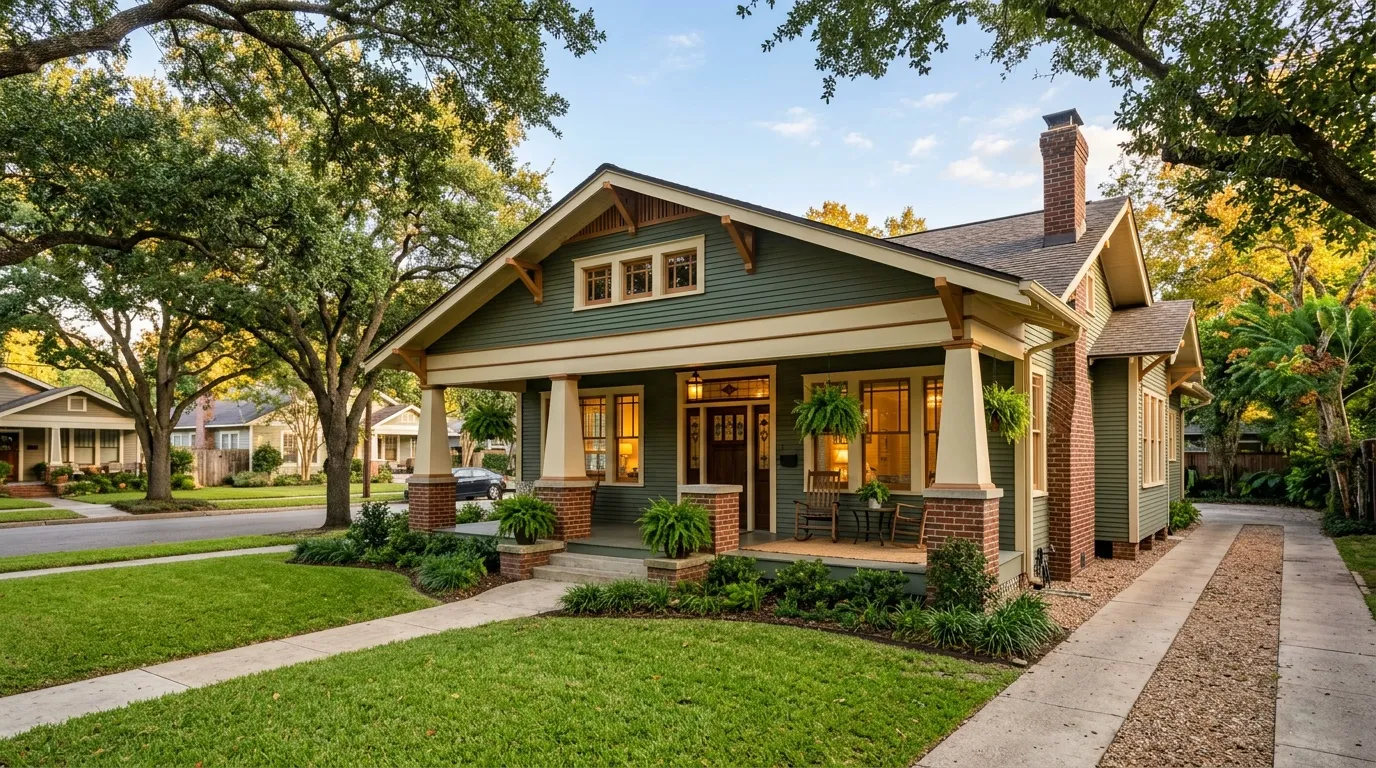
From bungalows off 19th Street to Victorians along Heights Boulevard, we help homeowners restore original floors, match boards after renovations, and quiet the squeaks that come with century-old pier-and-beam homes.
Know your floor
Heights homes built between the 1890s and 1930s were typically framed on pier-and-beam foundations with narrow-strip heart pine or red oak. Heart pine from old-growth longleaf forests isn’t milled new anymore, so repairs require reclaimed boards — which we source and mill to match.
Newer Heights infill homes and renovations often combine original floors with new wide-plank white oak in additions. Blending the two with matched stain and a uniform finish is one of our most common Heights projects.
Local conditions
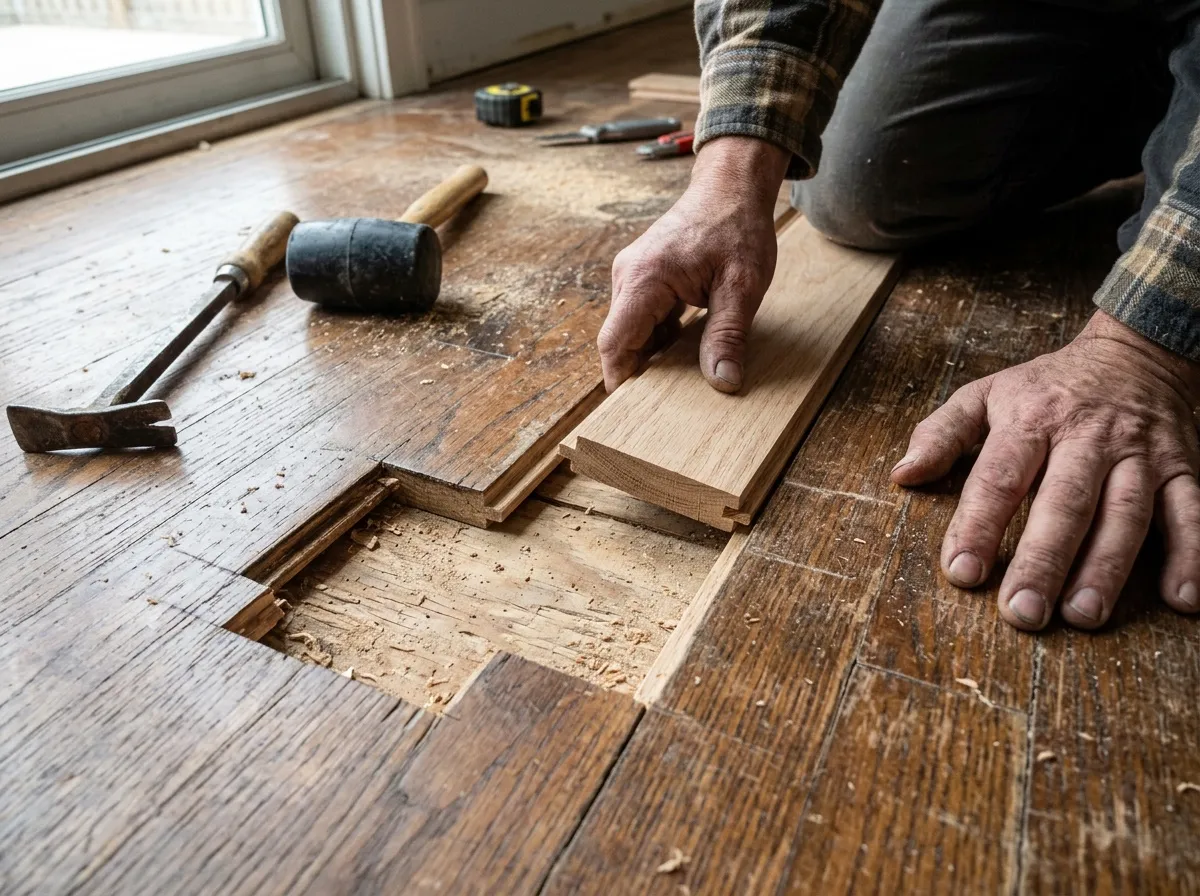
Most Heights floors we work on date from the 1890s to the 1930s, so the wood is old-growth heart pine or early oak that has been through a century of sanding, patching and painting. Many have been sanded several times already, which is why we check how much wearable wood is left before recommending another full sand.
Because Heights homes sit up on piers, the crawl space is part of the floor system. Poor ventilation, plumbing leaks and a hot, humid Houston summer under the house all show up as cupping and soft spots in the boards above. Areas close to White Oak Bayou, including parts of Woodland Heights, have also taken on water in major storms, so we check moisture before any repair.
Common problems
Century-old pier-and-beam framing and seasonal clay movement loosen boards and subfloors.
Removed walls, old floor furnace grates and additions leave gaps that need matched boards.
Soft heart pine dents and wears faster; careful sanding preserves its thin remaining wood.
Moist air under the house can cause cupping without any visible leak, and draws termites to the framing.
Services
Service area
We serve homes throughout Houston Heights and the surrounding area, including homes near Heights Boulevard, 19th Street, White Oak Bayou Greenway, Donovan Park. We serve ZIP codes 77008, 77007, 77009 with on-site estimates.
Call to schedule an estimateFAQ
Yes. Because new old-growth heart pine isn’t available, we source reclaimed heart pine and mill it to the same width and thickness, or borrow boards from a closet and fill the closet with new wood. Stain and finish are then blended to match the original patina.
Most pre-1940 Heights homes sit on pier-and-beam foundations. Over decades, nails loosen, subfloors separate from joists and the foundation moves with the clay soil. We can usually fix the squeaks from the crawl space without touching the finished floor.
Yes. Heart pine is soft and many Heights floors have already been sanded more than once, so we measure remaining wood above the tongue and use a light, controlled sanding pattern. Where a floor is too thin to sand again, a screen and recoat or spot repairs are the safer option.
Usually not. Houston's historic district rules for the Heights (Houston Heights East, West and South) cover exterior changes that need a Certificate of Appropriateness. Interior work like sanding, refinishing and board replacement generally isn't reviewed. If the project also changes the exterior, such as an addition, check with the City of Houston Planning Department first.
Yes. Houston Heights (77008, 77007, 77009) is inside our regular Houston service area, about 4 miles northwest of downtown, including homes around Heights Boulevard and 19th Street. Call to schedule an on-site estimate.
Call for an on-site estimate anywhere in Houston. We’ll inspect the damage, explain your options honestly, and give you a written price before any work starts.